NHRC, India, organises an Open House Discussion on “Measures to Curb Spurious Medicines in India”
NHRC Member, Justice (Dr.) Bidyut Ranjan Sarangi chairing the meet emphasises risks of isolated regulatory challenges translating into large-scale human distress if not addressed decisively and systematically
NHRC Member Smt. Vijaya Bharathi Sayani says, the issue requires to be urgently addressed by placing in place strengthened oversight and accountability mechanisms in the pharmaceutical ecosystem
Secretary General, Shri Bharat Lal highlights spurious drugs being different from substandard drugs but both require coordinated institutional action to combat the menace
Among various suggestion from the discussions involving multi-stakeholders stress upon the need to establish a comprehensive, centralised databank on spurious and sub-standard medicines, integrating inputs from enforcement agencies, regulators and states
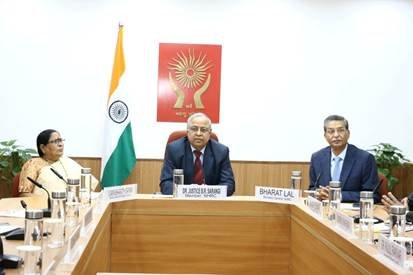
The National Human Rights Commission (NHRC), India organised an Open House Discussion (OHD) in hybrid mode on the theme ‘Measures to Curb Spurious Medicines in India’ at its premises in New Delhi. NHRC Member, Justice (Dr.) Bidyut Ranjan Sarangi chaired it. NHRC Member, Smt. Vijaya Bharathi Sayani; Former Member, NHRC, Shri Rajiv Jain; Secretary General, Shri Bharat Lal; Director General (Investigation), Smt. Anupama Nilekar Chandra; Registrar (Law), Shri Joginder Singh; Joint Secretaries, Shri Samir Kumar, Smt. Saidingpuii Chhakchhuak; along with senior government functionaries from the centre and state governments; regulators; law enforcement authorities; domain experts and representatives from the pharmaceutical sector participated.
Justice (Dr.) Bidyut Ranjan Sarangi said that in a country as vast and diverse as India, even isolated regulatory challenges can translate into large-scale human distress if not addressed decisively and systematically. He said that growing threat posed by spurious, substandard and falsified medicines and its direct implications on the right to life and health, demands coordinated, multi-sectoral action to address this grave issue of human rights violation.